My Life with MS: A Journey of Resilience

tRi Ghana • March 13, 2025

Beginnings and the First Signs.

I went to Legon (University of Ghana), but honestly, I didn’t really want to be there. My love was art, but school felt like something I just had to do. While I was there, I started experiencing some weird triggers—intense pins and needles in my body—but I brushed it off. The pain would come and go, so I figured I was good.


Corporate Stress and a Life-Changing Accident

After Legon, I worked in a bank as a relationship officer in corporate banking on the Asia and Middle East Desk. My daily routine involved a lot of “Xie Xie” and “Ni Hao”—handling international clients, managing accounts, and basically navigating high-pressure work in multiple time zones. Stressful as hell.


Then, a week before Christmas in 2013, I had an accident coming back from work. That was the turning point. According to the doctor, the accident either triggered my MS, or I had already been misdiagnosed with Myasthenia Gravis.


Six months after the accident, I had to leave the bank by mutual consent. My body wasn’t feeling right, and my mind too. I didn’t tell my family immediately because I felt guilty—like I was letting them down. Eventually, I told them and decided to focus on school, so I enrolled in a Business Administration program at GIMPA. Still not my passion, but it was something.


Caregiving While Declining

During that time, my dad had a serious health issue. Suddenly, I found myself playing the role of an ad hoc nurse, even though my own physical state wasn’t great. I remember one night at the hospital when no nurses responded to our calls. I had to carry him from his bed to the bathroom. To this day, we both agree that was a miracle of gargantuan pro max proportions.


As my Dad started getting better, I started getting worse. But it wasn’t until 2019, when my cousin (really my big sis, who’s an angel) came down from the U.S. and saw how bad things were, that I finally got answers. She arranged for me to see a neurologist over there, and in December 2019, I was officially diagnosed with MS. I started infusions every six months (Rituximab).


Through it all, I received the best of care, no matter the cost. My family and loved ones made sure I got what I needed—medically, emotionally, and financially. They never hesitated. No shortcuts. Whatever it took, they made it happen. That level of sacrifice? It’s something I’ll never take for granted.


Seclusion and Darkness

One of the first major symptoms that hit me hard was optic neuritis—a condition that made me extremely sensitive to light. I had to stay in the dark most of the time, away from screens. My love for football dimmed a bit, too, because watching matches became difficult. But honestly, Manchester United and the Black Stars haven’t made me miss much, so I’m good.

Lol, people also had jokes—“Sewell can’t see well no more.” And you know what? Even I had to laugh at that one.


Prophecies, Silence, and the Last Meal Question

Of course, with everything happening, people around me saw this as a spiritual attack. I kept getting invited (sometimes dragged) to prayer camps. Pastors would show up at my place. One even told me he saw a vision of me dying on May 5, 2020.


That day was something else. I was already exhausted—mentally, emotionally, physically. So I just looked the man dead in the eye and asked, “What exact time? Morning or evening? Should I be having my last breakfast or lunch?


To be fair, the pastor did make us pray against it. But the specific nature of what he said stuck in my head for a long time. I ended up being in the U.S. on “the day,” and let’s just say every action I made was done with extreme intentionality.


That whole experience really showed me something though. My friends were all there when the prophecy was made. And when I turned to look at them, they were silent. Not one of them objected. They just stared at me while I looked at them incredulously, waiting for someone to call out the nonsense.

But no—it was just me against the room.


That was the moment I fully realized—people will believe what they want to believe, even if it means watching their friend accept a death sentence from some random man of God.


But I hold no malice toward them. They were doing the best they could at the time, trying to make sense of something none of us fully understood. We were all just navigating it the best way we knew how.


MS: The Duet You Never Asked For

MS will play with your mind—keep it hanging, let you cuss at yourself, and laugh at the same time. It’s like a constant battle. Or let’s say, a duet. Sometimes you win. Sometimes too, you take the L. And if you don’t take the L with grace? Na you do your body, because no one cares. It will build your inner strength (I wish that strength manifested in my physique though… just saying). But it’s all good.


The Mental Game: Brain Fog and Regret

If there’s one thing MS has done, it’s malfunction my brain in the most ridiculous ways.


Brain fog? That’s an understatement. I’ll make decisions—sometimes impulsively, sometimes thinking I’m completely in the right—only to later realize I was completely wrong.


Sometimes it’s immediate. Sometimes it’s days or weeks later. But here’s the real kicker—pride won’t always let me accept what I’ve done. Even when I know deep down that I messed up, owning up to it feels like a fight against myself.

It’s frustrating. It makes relationships—friendships, family, work—all harder to navigate. Because MS doesn’t just affect my body; it plays chess with my mind, making me question my own decisions, reactions, and sometimes even my memory.

One minute, I think I’m making sense. The next, I’m replaying a conversation and realizing, “Wait… that didn’t go the way I thought it did.”


I’ve had to learn to slow down. To pause before reacting. To step back and ask myself, “Is this me, or is this MS acting up?” It’s an ongoing lesson, but I’m learning.


Faith, Doubts, and Seeing Through the BS

My faith was tested—no lie. “It is well” became a phrase I heard way too often, and after a while, I started interpreting it as a way for people to close a conversation because it was too awkward.


But here’s the thing—through all of this, I actually became less religious and more spiritual. I stopped chasing after signs and started focusing on a real relationship with God. No theatrics, no middlemen, just me and Him.


Oh, and guess what? I’m a Sunday school teacher now. Lol, who would have thought? The same me that was side-eyeing pastors? Now I’m here teaching kids about faith. Life is funny like that.


Moving Forward

Passion turned profession. I jumped into the creative scene, and I have a lot of plans—written and unwritten. Kids have to be a part of it because they are one of my passions.

And as for my social life? I wasn’t exactly a party animal, but I was around. I enjoyed being with people, showing up, vibing. So yeah, getting back into the world is a process, but I’m making moves.


One thing I know for sure? God and I, we get move. E no source yet, but till then, I’ll not be having any last meals anytime soon.

By tRi Ghana February 14, 2026
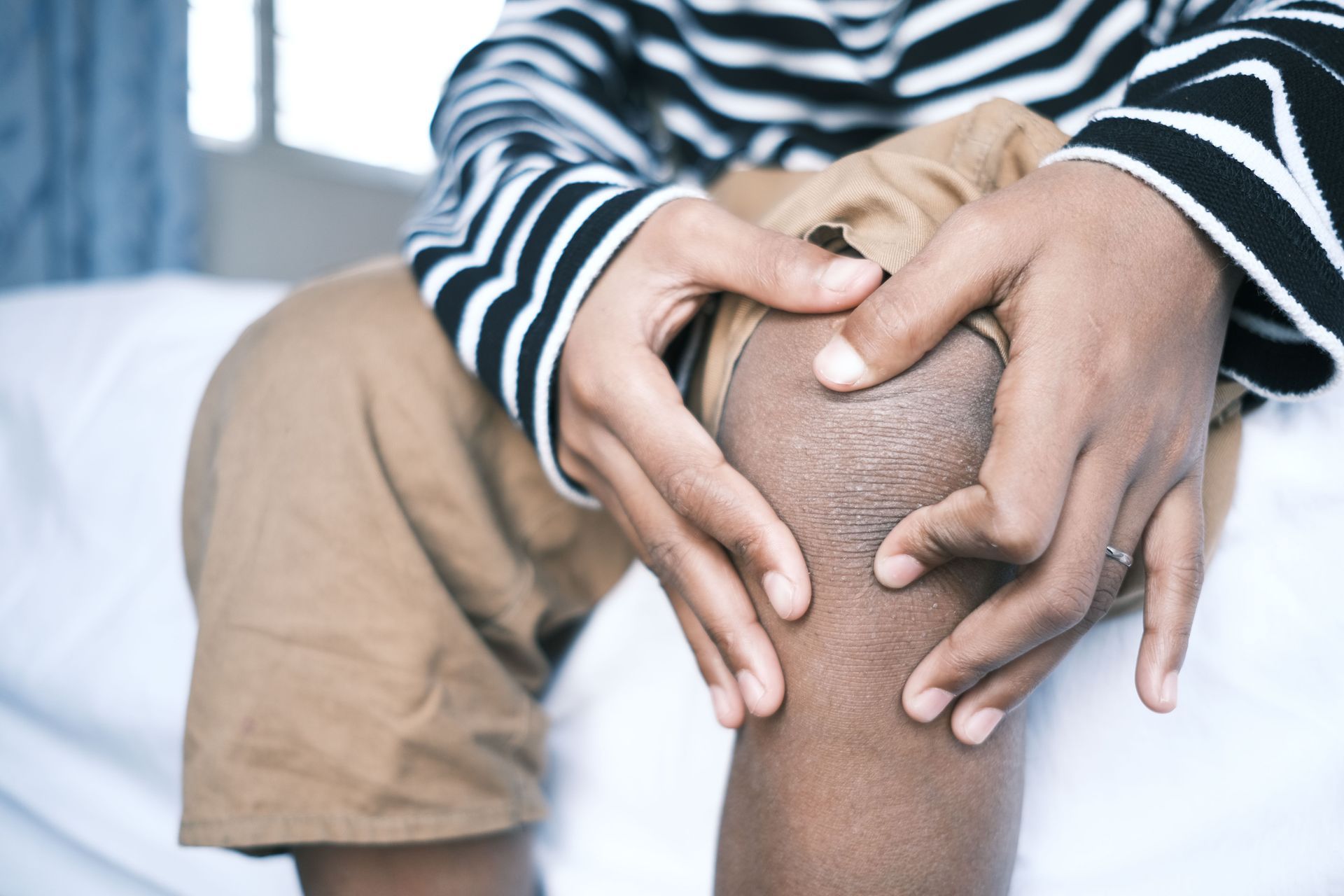
This Valentine’s month, learn how compassion, awareness, and community support can improve the lives of people living with rheumatic conditions in Ghana.
A person sleeping peacefully, symbolizing the connection between sleep and managing RA symptoms.
By tRi Ghana February 2, 2026
February is Rheumatoid Arthritis Awareness Month. Learn how sleep affects rheumatoid arthritis, and practical tips to improve rest and quality of life.
fireworks to celebrate the new year
By Prof Dzifa Dey January 1, 2026
tRi Ghana wishes you a healthy 2026! Prioritize your wellbeing with our latest updates and community initiatives. Here’s to an amazing year of wellness and growth.
Santa rocking out and playing a Christmas tree like an electric guitar.
By tRi Ghana December 25, 2025
Raising awareness and compassion for people living with rheumatic conditions in Ghana this Christmas season.
By tRi Ghana November 19, 2025
On International Men’s Day , we take a moment at The Rheumatology Initiative (tRi Ghana) to recognise an often-overlooked group: men living with autoimmune rheumatic diseases . Whether it’s rheumatoid arthritis, lupus, or other chronic conditions, men face unique challenges in both diagnosis and support. Breaking the Silence on Male Rheumatic Conditions Autoimmune diseases are often perceived as “women’s diseases,” but men are affected too. This misconception can delay diagnosis, as symptoms may be dismissed or misattributed. On this special day, tRi Ghana calls on everyone to raise awareness about rheumatic conditions in men, encouraging early screening and better education. The Importance of Support Living with a chronic disease is difficult—physically, emotionally, socially. For men, social stigma or cultural expectations about strength may make it harder for them to ask for help. tRi Ghana provides vital support through peer groups, education, and information, empowering men to seek help, share their experiences, and build resilience. tRi Ghana’s Role Since our founding in 2012, tRi Ghana has offered education, advocacy, and research into autoimmune rheumatic conditions. Our support groups, such as Rheusolute , create safe spaces for people—including men—to connect, share stories, and learn management strategies. Our patient assistance programme also helps with financial and medical support, covering discounted medication and free medical consultations to ensure all patients—regardless of gender—receive care. Encouraging Men to Advocate for Their Health On International Men’s Day, we urge men to listen to their bodies: if you experience persistent joint pain, stiffness, or fatigue, don’t ignore it. Advocate for your health by seeking a rheumatologist, asking for blood tests, and joining a support network. At tRi Ghana, we welcome you with open arms. Highlighting Role Models This day, we celebrate men who courageously live with rheumatic disease and also those who support loved ones in their journey. Your bravery, openness, and perseverance inspire others—and drive our work. How You Can Help Raise awareness : Share stories of men affected by rheumatic conditions on social media, using #InternationalMensDay and #RheumaticHealth . Support tRi Ghana : Donate to fund medication, research and patient support. Join our community : Attend support groups for men, or bring a male friend or family member to a session. We meet monthly and welcome all. A Message of Hope To the men living with these conditions: you are not alone. tRi Ghana stands with you. On International Men’s Day, let’s acknowledge your strength—and commit to a future where your health is seen, valued, and supported.
By tRi Ghana October 14, 2025
tRi Ghana introduces Rheuma Connect, Ghana’s first digital platform for managing rheumatic and autoimmune diseases. Download the app and take charge of your health.
A butterfly settled on a leaf
By tRi Ghana September 1, 2025
Rheumatic and musculoskeletal diseases are more prevalent in Ghana than many realize, often leading to chronic pain and disability. At The Rheumatology Initiative (TRI) Ghana, our mission is to bring hope and support to those affected by these conditions. Through education, advocacy, and patient support, we are working to improve the quality of life for countless individuals and their families. Rheumatic diseases, such as arthritis, can impact anyone, regardless of age or background. A lack of awareness often leads to late diagnosis and inadequate treatment, compounding the challenges faced by patients. Our work focuses on closing this gap by providing accurate information, connecting patients with expert care, and offering support groups where individuals can share their stories and find strength in community. By raising awareness, we can help people recognize symptoms earlier and seek the medical attention they need. We advocate for better access to rheumatological care across Ghana and work with healthcare professionals to enhance their knowledge and skills. Your support, whether through volunteering, donations, or simply sharing our message, is crucial. Together, we can build a future where rheumatic diseases are no longer a silent struggle, but a manageable condition for all.
A woman lying down in pain
By tRi Ghana August 11, 2025
Rheumatic diseases, which include conditions like rheumatoid arthritis, are a significant health challenge across Africa. They are often misunderstood and underdiagnosed, leading to delayed treatment and poor health outcomes. Educating the public and healthcare professionals is a crucial first step in addressing this issue. Awareness campaigns and educational programs are essential for helping people recognize the symptoms and seek help early. For individuals living with these conditions, support extends beyond medical treatment. The chronic and often debilitating nature of rheumatic diseases means that patients also need emotional, psychological, and social support . A holistic approach to patient care is vital, providing resources and guidance to help individuals manage their condition and maintain a good quality of life. This can include establishing support groups where patients can connect with others who understand their journey, as well as providing access to patient assistance programs for treatment. The work of dedicated organizations is key to building this support infrastructure. By bringing together a diverse team of professionals, from doctors and counsellors to community leaders, they can create a comprehensive network of care. Their efforts not only raise awareness but also build a resilient community for patients, offering hope and a sense of belonging. The ultimate goal is to empower individuals to live full and active lives, despite their diagnosis. To learn more visit: www.trighana.org
A mother and her son and daughter
By tRi Ghana July 24, 2025
For families in Ghana, receiving a diagnosis of Juvenile Idiopathic Arthritis (JIA) can feel overwhelming. Questions about treatment, lifestyle changes, and the future often come all at once. At tRi Ghana, we believe that knowledge is empowerment — and that children with JIA can thrive when families have the right tools and support. The Emotional Journey Hearing that your child has a chronic illness can be emotionally challenging. It’s normal to feel fear, sadness, or even guilt — but remember: JIA is nobody’s fault . Support from other parents and patient groups can make the journey less isolating. Treatment Options While there’s no cure for JIA, treatments can control symptoms and prevent long-term joint damage. These may include: Nonsteroidal anti-inflammatory drugs (NSAIDs) to reduce pain and swelling Disease-modifying antirheumatic drugs (DMARDs) to slow disease progression Biologic agents for children who don’t respond to other treatments Physical therapy to maintain flexibility and strength Treatment plans should be tailored to each child’s needs, with regular check-ups to monitor progress. Daily Life Tips for Children with JIA Stay active – Low-impact activities like swimming or cycling keep joints moving. Balanced diet – Anti-inflammatory foods such as fruits, vegetables, and omega-3-rich fish can help overall health. Good sleep routine – Rest is essential for healing and energy. School support – Teachers should understand your child’s needs, including rest breaks or adapted physical education. The Role of Family and Community Living with JIA isn’t just about medical care — it’s about creating a supportive environment where the child feels capable and included. Family encouragement, community understanding, and peer friendships all contribute to better outcomes. JIA Awareness in Ghana In many Ghanaian communities, awareness is still low. By talking openly about JIA, sharing information on social media, and attending tRi Ghana’s support events, you’re helping to break the silence and stigma. Final Message A JIA diagnosis is not the end of childhood dreams. With proper care, children can play, learn, and grow just like their peers. This July, as we mark Juvenile Arthritis Awareness Month , let’s unite to ensure no child’s potential is limited by delayed diagnosis or lack of support.
Sun shining bright in the sky
By tRi Ghana July 3, 2025
Every July, the world comes together to raise awareness for Juvenile Idiopathic Arthritis (JIA) – a chronic condition that affects children and young people under the age of 16. In Ghana, awareness is especially important because rheumatic diseases are often misunderstood, underdiagnosed, or mistaken for temporary joint injuries. What Is Juvenile Idiopathic Arthritis? Juvenile Idiopathic Arthritis is the most common type of arthritis in children. “Idiopathic” means the cause is unknown, and “arthritis” refers to inflammation of the joints. JIA isn’t just about occasional aches — it’s an autoimmune condition where the immune system mistakenly attacks the body’s own tissues, leading to pain, swelling, and stiffness. Common Symptoms Persistent joint pain, swelling, or warmth Morning stiffness that improves during the day Fatigue and low energy Eye inflammation (in some types of JIA) Reduced physical activity or reluctance to walk/play These symptoms may come and go, making it difficult for parents and doctors to identify the condition early. Why Early Diagnosis Matters If left untreated, JIA can cause joint damage, growth problems, and in some cases, long-term disability. Early diagnosis and treatment are essential for: Preventing irreversible joint damage Maintaining a child’s mobility and quality of life Reducing the risk of complications such as vision problems At tRi Ghana, we advocate for early screening , especially when symptoms persist for more than six weeks. Breaking the Myths in Ghana Many people believe arthritis is a condition for the elderly — this misconception leads to delayed treatment for children. Some also turn to unverified herbal remedies before seeking medical advice, which can delay effective care. Education is the first step in changing this narrative. How You Can Help This July Spread the word about JIA in your community. Encourage parents to seek medical advice early if their child has persistent joint issues. Support tRi Ghana’s awareness programs through donations or volunteering. This July, let’s commit to making sure every child with JIA gets the diagnosis, treatment, and support they need to live a full and active life.